The best diabetes nutrition app depends on what you need help with.
Some apps focus on recording blood glucose and insulin. Others are built for calorie counting, low-carb meal planning, or estimating carbohydrates from a meal photo. DiabEats takes a different approach: it helps users inspect packaged foods, understand nutrition labels and ingredients, and make more informed food choices.
This guide compares DiabEats with MyFitnessPal, Carb Manager, SNAQ, Glucose Buddy, mySugr, and Diabetes Tracker by MyNetDiary.
Quick comparison
| App | Best suited for | Barcode scanning | Carb or nutrition tracking | Blood-glucose logging | Main limitation |
|---|---|---|---|---|---|
| DiabEats | Understanding packaged foods, ingredients, additives, and nutrition labels | Yes | Food-level nutrition analysis | No | Not a glucose or insulin-management system |
| MyFitnessPal | General calorie, food, and macronutrient tracking | Yes, with Premium | Yes | Not its primary purpose | Diabetes-specific guidance is limited |
| Carb Manager | Keto and low-carbohydrate planning | Yes | Strong low-carb and macro focus | Some health integrations | Primarily designed around low-carb and keto goals |
| SNAQ | Estimating carbohydrates from meal photos | Not its main focus | Meal-based estimates | Integrations may apply | Estimates should be verified before treatment decisions |
| Glucose Buddy | Recording glucose and other diabetes information | Check current version | Food and carbohydrate logging | Yes | Less focused on packaged-food interpretation |
| mySugr | Glucose and insulin records | Not its main focus | Carbohydrate logging | Yes | Not primarily a food-scanning application |
| MyNetDiary | Food, carbohydrate, medication, and glucose records | Yes | Yes | Yes | The number of tracking options may be more than some users need |
Best app for understanding packaged foods
DiabEats is designed for people who want more than a calorie total after scanning a product.
A supported barcode scan can show nutrition facts, identify ingredients and additives, and explain why specific parts of the product may matter. This can be helpful when comparing breakfast cereals, drinks, snacks, sauces, frozen foods, and other packaged products.
When an exact product match cannot be verified, DiabEats does not silently invent one. Depending on the available information, users may search by product name or analyze a visible nutrition label.
It is designed to help answer questions such as:
- How much carbohydrate or added sugar does this product contain?
- What ingredients and additives are listed?
- Why did the product receive its result?
- Is there another product I may want to compare with it?
- Was the product identified exactly, or is more information needed?
A scan should be treated as a starting point. Confirm important information against the physical package because recipes, serving sizes, and nutrition labels can change.
Best app for general food and calorie tracking
MyFitnessPal is a broad nutrition and fitness tracker. Users can record meals, calories, carbohydrates, protein, fat, exercise, and weight.
Its barcode scanner is available through its Premium subscription, according to MyFitnessPal’s current documentation. Premium also includes meal scanning, custom macronutrient goals, net-carbohydrate tracking, and food analysis.
MyFitnessPal may be a better fit than DiabEats when the main goal is maintaining a long-term food diary or monitoring total daily calories and macronutrients. DiabEats may be the better fit when the immediate goal is examining a packaged product and understanding what is inside it.
Best app for low-carb and keto planning
Carb Manager is built around carbohydrate and macronutrient tracking, with a strong emphasis on low-carb and ketogenic eating. It includes food tracking, scanning tools, meal planning, and low-carb recipes.
It may be the strongest choice here for someone whose primary objective is following a structured keto or low-carb plan. DiabEats serves a different role: it can help a shopper inspect a specific product’s nutrition facts and ingredients before deciding whether that product fits personal carbohydrate goals.
Best app for estimating carbohydrates from meal photos
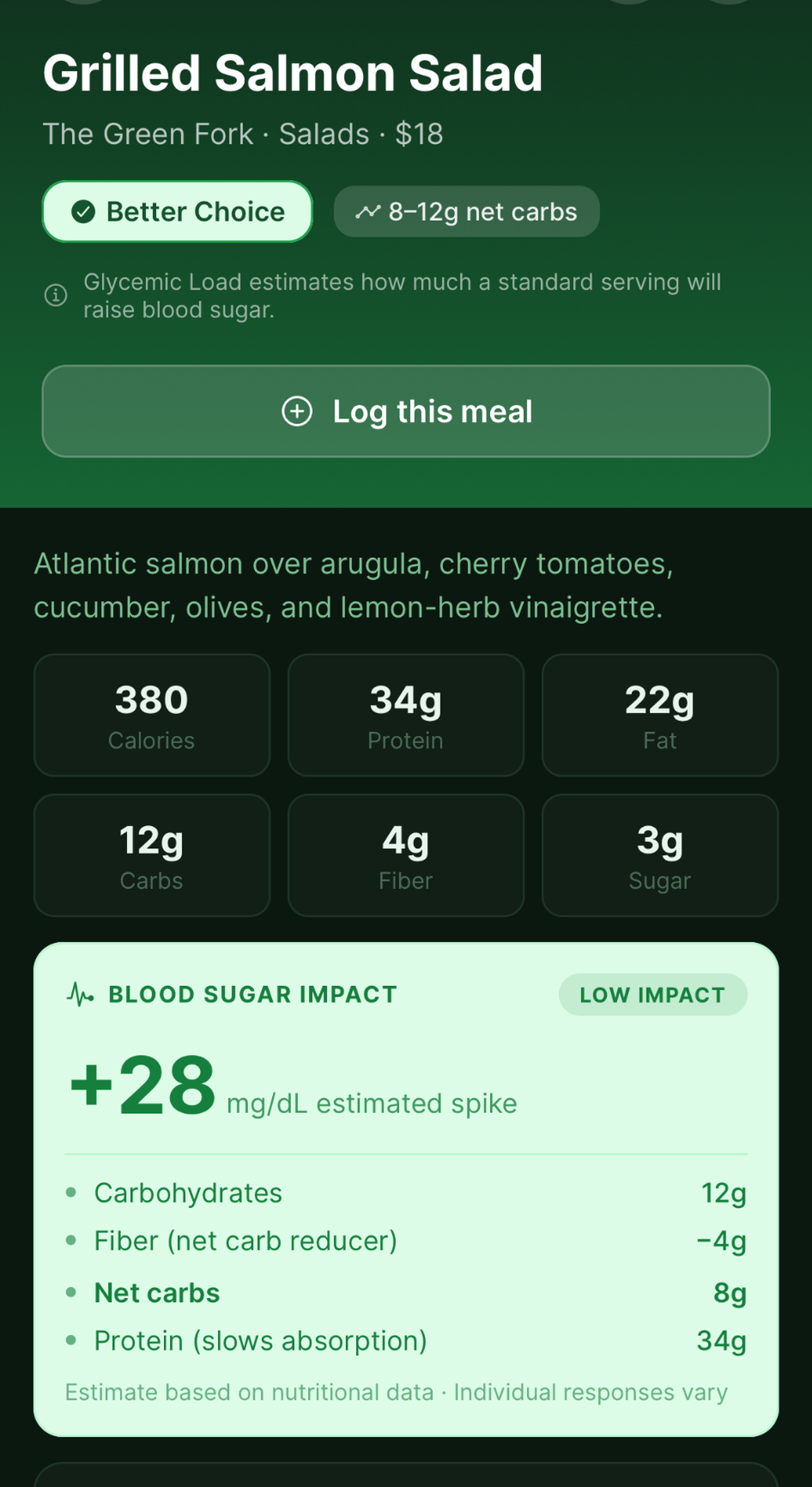
DiabEats also offers plated-meal photo analysis and restaurant menu-photo analysis. These are image-based estimates, not verified nutrition records.
SNAQ focuses on meal analysis and carbohydrate estimation using food images. This may help people who find manual meal entry difficult.
Image-based carbohydrate estimates are still estimates. Portion size, preparation methods, hidden ingredients, sauces, and recipe differences can affect the result. People who use carbohydrate information for insulin or medication decisions should follow their healthcare team’s process and verify uncertain estimates.
Best apps for diabetes records
Glucose Buddy, mySugr, and Diabetes Tracker by MyNetDiary are more directly focused on diabetes recordkeeping than DiabEats. Depending on the app and subscription, these tools may record blood-glucose readings, carbohydrate intake, meals, medication or insulin, weight, activity, notes, and trends.
These apps may be more appropriate when maintaining diabetes records is the main goal. DiabEats does not replace a glucose meter, continuous glucose monitor, insulin calculator, or clinical diabetes-management system. It can instead serve as a food-information tool alongside an established diabetes routine.
Best options by need
For Type 1 diabetes
People with Type 1 diabetes commonly need dependable carbohydrate information together with glucose and insulin records. mySugr, Glucose Buddy, or another diabetes-management tool may be more appropriate for those records. DiabEats may add information about packaged-food labels and ingredients, but its results should not independently determine an insulin dose.
For Type 2 diabetes
People with Type 2 diabetes may want help understanding carbohydrates, added sugars, serving sizes, and ingredient lists. DiabEats can support packaged-food comparisons, while MyFitnessPal provides broader daily nutrition tracking. Diabetes recordkeeping apps may help when glucose and medication records are also needed.
For prediabetes
A complicated medical log is not necessary for everyone with prediabetes. DiabEats may help with packaged-food decisions, while MyFitnessPal or MyNetDiary may be more suitable when long-term food and weight tracking is the priority.
For low-carb shoppers
Carb Manager is the most specialized low-carb app in this comparison. DiabEats may complement it by helping users inspect a product before purchasing it. Neither app can determine whether a particular eating plan is medically appropriate for an individual.
For people who dislike manual food entry
SNAQ’s photo-based approach may reduce manual meal entry. MyFitnessPal also offers meal-scanning and voice-logging features through paid plans. DiabEats focuses more on identifying and explaining individual food products than automatically recording an entire meal.
Restaurant and menu comparisons
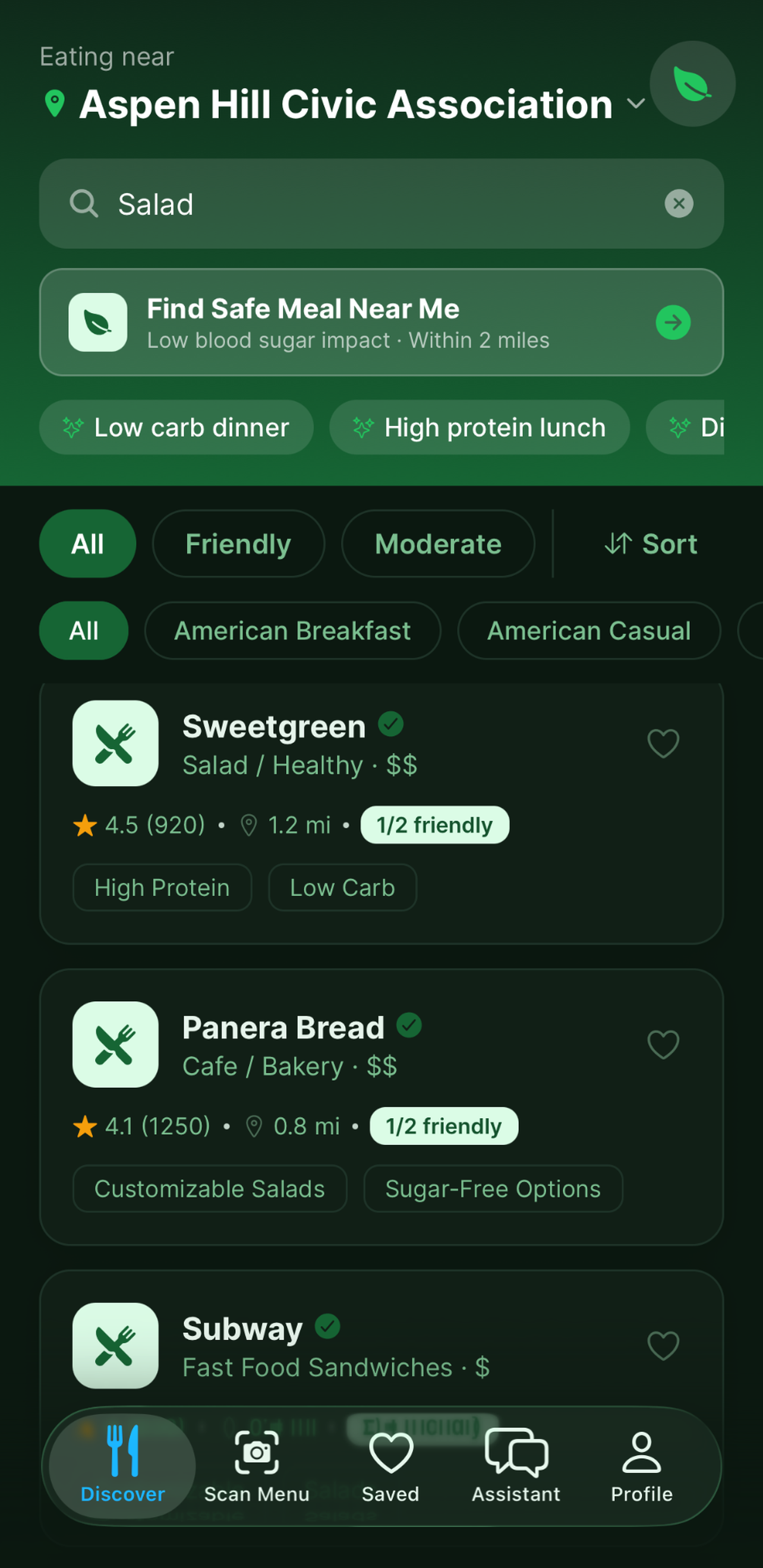
DiabEats restaurant meal analysis uses a curated catalog and supplied menu information to compare listed nutrition signals. It is not a complete live directory, and menus, recipes, portions, and ingredients can change. Confirm details with the restaurant.
What makes DiabEats different?
DiabEats is not trying to replace every diabetes application. Its main strength is turning a food package into understandable information. Instead of displaying only calories or carbohydrates, DiabEats can organize nutrition facts, ingredients, additives, and scoring explanations in one place.
Its product-identification process is intended to distinguish between an exact packaged-product match, a generic food or produce item, information obtained from a visible label, and a product that cannot yet be identified confidently. That distinction matters: a nutrition app should tell users when information is uncertain instead of presenting a guess as verified.
Try DiabEats
Inspect food labels, compare nutrition signals, and get clear educational context on iPhone, iPad, and Android.
Frequently asked questions
What is the best diabetes nutrition app?
There is no single best app for everyone. DiabEats is suited to packaged-food analysis; MyFitnessPal to general food tracking; Carb Manager to low-carb planning; SNAQ to meal-photo analysis; and apps such as mySugr, Glucose Buddy, and MyNetDiary to diabetes recordkeeping.
Which diabetes app scans food barcodes?
DiabEats scans supported product barcodes and provides nutrition and ingredient information when a reliable match is available. MyFitnessPal, Carb Manager, and MyNetDiary also provide scanning features, although access may depend on platform or subscription.
Can DiabEats measure blood sugar?
No. DiabEats does not measure blood glucose and is not a glucose-monitoring device. A glucose meter or continuous glucose monitor is required to measure glucose.
Can DiabEats calculate an insulin dose?
No. DiabEats is a food-information application, not an insulin-dose calculator. Follow instructions provided by your healthcare professional.
Can a food-scanning app identify every product?
No database contains every product, and packaging can change. A responsible scanner should disclose when it cannot verify an exact match. Confirm important nutrition information against the package label.
Should I use more than one app?
Possibly. Someone may use DiabEats to understand packaged foods while using mySugr, Glucose Buddy, or another system for glucose and treatment records. Multiple apps are useful only if they make the routine clearer.
Final recommendation
Choose DiabEats for scanning and understanding packaged foods, nutrition labels, ingredients, and additives.
Choose MyFitnessPal for general calorie and macronutrient tracking.
Choose Carb Manager for a structured low-carb or keto workflow.
Choose SNAQ for meal-photo analysis and carbohydrate estimation.
Choose mySugr, Glucose Buddy, or MyNetDiary when glucose and diabetes recordkeeping are the priority.
Whichever app you choose, verify important food information and use it as a support tool—not as a substitute for individualized medical care.